I am thinking about this question today for two reasons: (1) last night I attended an interactive event at the National Geographic Society concerning the science of taste; and (2) inspired by that, I’ve spent much of today perusing one of my favorite culinary reference books, The Flavor Bible, by Karen Page and Andrew Dornenburg. An exceptionally talented neighborhood bartender introduced me to this book earlier this year, and it has become a constant source of inspiration for creating recipes from whole cloth and adapting the recipes of others based on what I happen to have on hand. This book is well worth the purchase price for anyone who likes to cook creatively, as opposed to being tethered within the rigid bounds of a recipe.
You might be thinking to yourself, taste is all about all our taste buds, right genius, so how complicated can this question be? Yes, those wonderful little things on our tongues are definitely a starting point when it comes to taste, but I would argue that they are just the beginning of a much more complex story.
Most people are familiar with the four basic tastes of sweet, sour, salty, and bitter, as registered by the taste buds, and many people also might know of the now increasingly-recognized “fifth taste,” umami, which is a savory taste found in miso, truffles (and other fungi), anchovies, and stinky cheese (I think you know what I mean here). The NatGeo event was interesting because the presenters said that, contrary to the conventional wisdom that many of us were taught in school, there are not regions of the tongue devoted to a particular taste category. Rather, the whole tongue is capable of registering all the various taste categories, to varying degrees.
Both the NatGeo presenters and The Flavor Bible agree that bitterness is the most sensitive of the tastes our taste buds perceive, and some of us are much more sensitive to it than others. We did an experiment last night in which each person put a thin wafer infused with the bitter flavor onto his or her tongue. Some people tasted nothing, others got an inkling of something, while still others (myself included) said “whooaa” and had to take several sips of the refreshing featured cocktail to wash the bitter taste away. Based on that, I’m thinking that the phrase “there’s no accounting for taste,” at least as it relates to food, might somehow hinge on the ability to register the bitter flavor.
The other thing The Flavor Bible and the NatGeo event have in common is the idea that flavor is not just about the taste buds. Rather, it is a holistic experience that for most of us inextricably is linked to our sense of smell. Another experiment last night was to take a jelly bean, chewing it first while holding one’s nostrils closed, and then later while breathing freely. Again, there was a range, with some people registering the same taste in both physical states and other people (perhaps not surprisingly I’m in this camp) going “whooaa” when the airways were no longer constricted, having a much more satisfying taste experience when smell was allowed to enter the equation. This made intuitive sense to me when I remembered how, when my grandmother lost her sense of smell in her early eighties, she also lost her sense of taste. May this never happen to you or anyone you love. . . .
Although taste, and the idea that aroma might influence taste, for many would be the end of the enquiry, The Flavor Bible, and to a lesser extent the NatGeo event, examine how visual, emotional, and even spiritual considerations affect the perception of flavor. Maybe it’s just because I’m a hippy liberal, but I do tend to think that all these things are relevant.
The idea that the appearance of food influences taste perception has some empirical support. J. Kenzi Lopez-Alt, in his book The Food Lab, at pp. 92-94, explores the importance of appearance, by dying the same food a different color and observing how people react to it differently based on its appearance. And they do react differently, even when tasting what is exactly the same thing save for a bit of food dye.
Layering on to all of this, the idea that emotion might play a part in taste was very recently, and painfully, brought home to me when my my stepchild asked his mother to bring a pot of StoveTop to a Thanksgiving celebration for which everyone knew that I would provide a handcrafted pan of dressing made from fresh onions, celery, mushrooms, sausage, and homemade stock. My initial reaction was to take it personally and be offended, but a new friend recently put it in what I think is a better perspective by observing that trying to fight with StoveTop was like trying to fight with Kraft Mac-n-Cheese. Even though it’s a vastly inferior product to its homemade counterpart by some of the more enlightened standards of judging the quality of food, in many cases it is what Mom made and what kid-kind is accustomed to, and sometimes there is just no arguing with that.
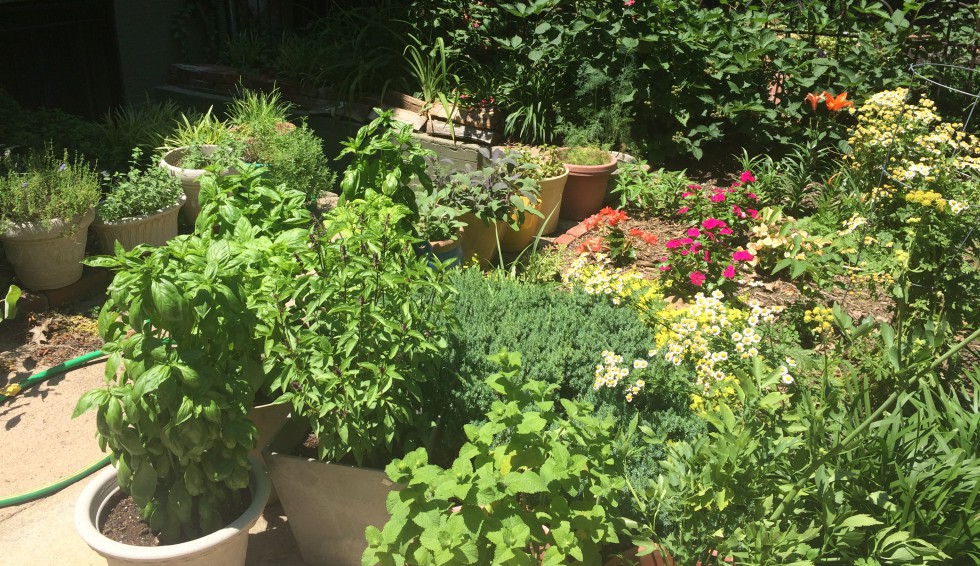
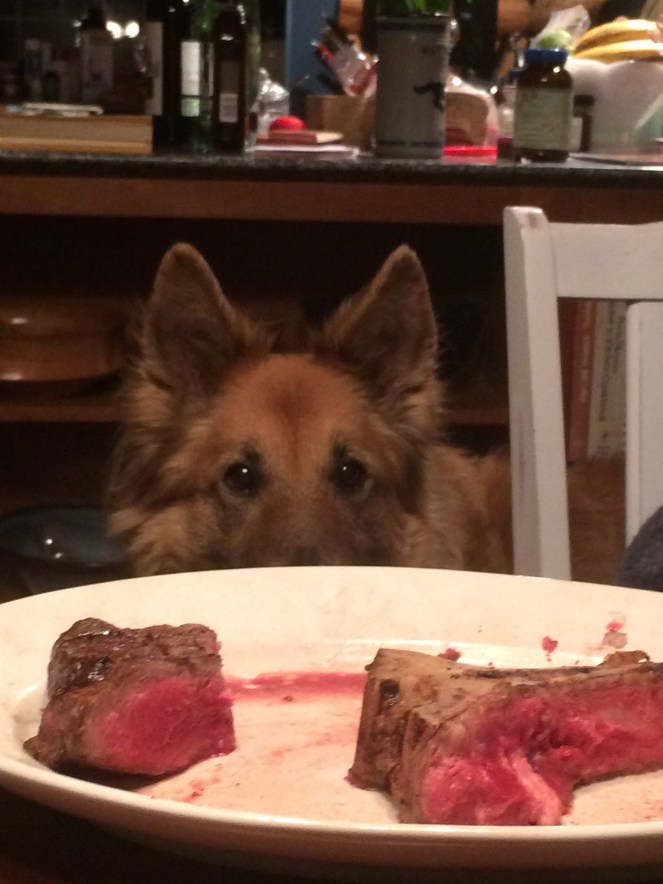
Then there’s what I would characterize as the spiritual element of taste, which involves considerations of how the food in question was raised. Go get a conventional butternut squash from your local supermarket, which comes from god knows where and likely was raised with the “help” of chemicals. Then go get a locally, organically grown butternut squash from your farmer’s market. Call me crazy, but I think the local, organic one is destined not only to look but also taste better. The same is true for animal products. Compare a chicken (or cow) raised as part of an agribusiness conglomerate with a chicken (or cow) that was pasture-raised on a farm three doors down from your neighbor’s country house and, well, I think you can guess how that will turn out. My dog of destiny, Jacob Santana Threatt, certainly knew the difference, when he stared me down for the “three doors down” steak on New Years Eve last year (I miss you dog, every day). . .
My hope is that, after reading all this, you will think a little bit more analytically about your next bite. What is it that defines the quality of its flavor for you? The pure taste you experience, the aroma, the texture, the visual impact, the fact that it is (or isn’t) what Mama used to make, or the idea that it’s better because you know about and approve of its provenance? Food for thought, for sure!
 Capitol Hill Cooks
I don’t think I’m sophisticated enough for this blog, I eat Kraft Mac & Cheese (Kraft Dinner, for those north of the border) at least once a week.
LikeLike
Yeah, but if Ma ever broke down and made the “real thing,” I bet you’d eat that instead. . . .
LikeLike